
Skip to content

Solutions

Solutions built to last inside your organization.

See three examples below. Each one adapts a model that works in another industry. We bring the people, the systems and the hands-on work.

01

R&D Labs

The infrastructure and innovation rigor to test ideas with real audiences and turn the results into practices the whole field can use.

Arts organizations are built to put on productions, not to experiment. We build an R&D lab inside your organization with your staff and artists, so ideas get tested with real audiences before big commitments and every result is shared.

A proven model

Bell Labs and BBC R&D

Both gave large institutions a protected place to test new ideas away from day-to-day pressure. Bell Labs did it for AT&T; BBC R&D tests new formats and technology before they reach audiences.

Now underway

The OPERA America R&D Lab

With OPERA America and its member companies, we are building an R&D Lab for the opera field across all five challenges: Audience Development, Economic Sustainability, Workforce and Labor, Innovation Capacity, Public Relevance.

Audience development
What brings younger and first-time audiences in, and what makes them come back and bring others?
Economic sustainability
How can companies grow earned revenue, rely less on donors and grants, and make each dollar go further?
Workforce and labor
How can the field close its skills gap by bringing innovation practitioners and methods into its teams?
Innovation capacity
What capacity, rigor and systems let companies test ideas outside of production and learn from each other’s successes and failures?
Public relevance
How can the field shed the “dying industry” image and show its wider impact on civic life?

How it works

  • Lab design with your staff and artists: mandate, operating charter and how experiments run
  • An advisory council of specialists in audience growth, workforce and labor, and leadership training who bring the expertise each test needs
  • Small, low-cost tests with real audiences, with pass and fail targets set before they start
  • Training for staff to form a hypothesis, run a test, read the evidence and change course
  • A shared data layer across organizations, so the field learns from every win and every loss
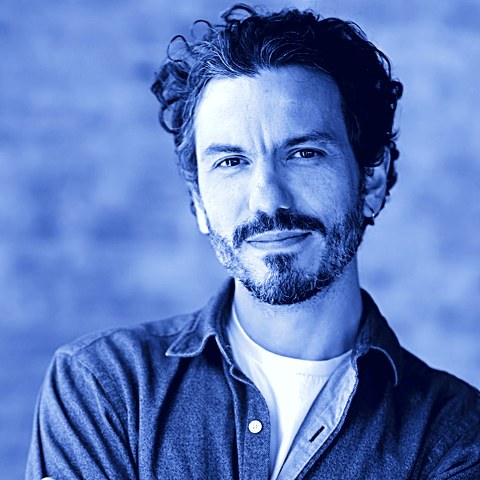
Portrait of Daniel Gomez Seidel, arms crossed, in front of a brick wall.

Partner, R&D Labs

Daniel Gomez Seidel

Innovation and service design

Daniel builds innovation capability inside large institutions. At Capital One he co-built the bank’s R&D Lab and trained more than 400 executives in design thinking. He has led service design and agile transformation programs for the World Bank and the United Nations, co-founded the innovation agency in-plural with StrawberryFrog, and mentors at the New Museum’s NEW INC.
02

For-Profit Arm

Create a for-profit arm inside your organization that adds new value streams, starting with the developed IP already in your vault.

Theaters are already adding value streams through for-profit arms: commercial transfers, cinema broadcasts, touring work and new uses for their buildings. We help you set one up that your nonprofit owns, with the legal structure, the people and the systems to run it, and its earnings return to the mission. The first stream is often IP commercialization. We review the rights to your commissions, readings, productions and archive, test titles with audiences, and then package and license the ones with proven demand or spin them out into a production.

A proven model

University technology transfer, like NYU’s Technology Opportunities & Ventures

Universities review faculty research, protect the rights and license it to industry. The royalties come back to the university and the researcher. We apply the same discipline to the creative work in your vault.

How it works

  • Legal and governance setup for a for-profit arm owned by your nonprofit
  • Rights review and market evaluation across commissions, readings, productions and archive
  • Audience testing that shows demand before anyone invests
  • Packaging and licensing to producers, studios and platforms, or a spin-out into a production, on terms that protect the artist
  • Training for your staff so the arm runs in house

Partners, For-Profit Arm

To be announced

  • A development executive who has worked with studios and knows how to find and package scripts for what they buy
  • A leader who has built technology transfer offices at universities
  • An entertainment lawyer who has set up both for-profit and nonprofit entities

In the field

How theaters are adding value streams

  • Manhattan Theatre Club

    MTC Productions

    A wholly owned for-profit subsidiary of the nonprofit theater.

  • National Theatre, London

    NT Productions and NT Live

    Trading companies owned by the charity take shows to the West End and Broadway and film them for cinemas. NT Live’s Prima Facie became the highest grossing UK event cinema release of all time.

  • Barbican, London

    Barbican Immersive

    A touring arm that develops major exhibitions, such as AI: More than Human, and sends them to museums and venues around the world.

  • Crow’s Theatre, Toronto

    Streetcar Crowsnest

    Built its home with a developer at the base of a condo tower, designed to earn: a restaurant, a lobby bar and spaces that host community events and rentals for two thirds of the year.

Field signals

Pilots prove artistic quality and an audience ecosystem.

  • Be More Chill

    After a regional run, the cast recording, led by “Michael in the Bathroom,” built a large online following that helped carry the show to Off-Broadway and Broadway.

  • Hazbin Hotel

    An independent pilot on YouTube drew tens of millions of views before the series was picked up and released on Prime Video.

  • Hadestown

    Began as a small community production and a concept album, years before New York Theatre Workshop’s production and its eight Tony Awards.

  • Obsession

    Curry Barker built an audience with short horror films on YouTube. His feature, made for $750K, sold to Focus Features for about $15M and grossed more than $500M worldwide.

03

Accelerator & Venture Funds

Take artists and theaters through an accelerator that grows the IP and gives it the best chance to earn revenue.

The IP is at the center. Artists and theaters go through a cohort program together: a set curriculum, audience testing, and the legal and IP setup that keeps the artist in creative control. A dedicated fund then invests in the works that prove their audience, alongside foundations, government partners and aligned investors. The artist keeps majority ownership and your organization keeps a share.

A proven model

Y Combinator and Techstars

Both run cohort-based programs with a set curriculum, mentors and access to partners, and both invest directly in the teams they support. The same structure works for creative work.

Proven at Yale

MOC Innovations and the Cultural Innovation Lab at Yale

MOC Innovations built the accelerator model used by the Cultural Innovation Lab at Yale, working with Connecticut theaters and performing arts centers.

25+
artist teams
10
new companies
$1.35M
raised by projects

How it works

  • A cohort program for artists and theaters, built on a shared curriculum
  • Training in business models, marketing and audience building for each work
  • Paid pilots that show what audiences will support
  • Legal and IP setup that keeps the artist in creative control
  • A fund that invests in proven works, with returns shared by the artist, your organization and the fund
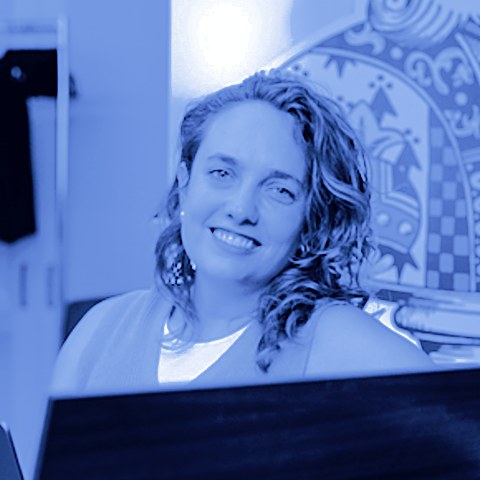
Portrait of Frances Pollock of MOC Innovations, smiling, seated at a harpsichord.

Partner, Accelerator & Venture Funds

MOC Innovations

Frances Pollock, Founder · Director, Cultural Innovation Lab at Yale

MOC Innovations has spent more than five years building arts accelerators, including the model behind the Cultural Innovation Lab at Yale, which works with Connecticut theaters and performing arts centers. They bring a cohort-based curriculum, a proven acceleration model and legal IP structures that keep artists in control of their work, and now bring that model to New York.

Let’s talk

Tell us about your organization and what you want to explore. We’ll follow up to set a time to talk.

* Required. We reply by email.